385 mm equals about 15.16 inches, or 1 foot 3.16 inches. To convert 385 millimeters to inches, divide 385 by 25.4. The exact conversion is approximately 15.15748 inches. If you need a simple number for measuring, building, or checking an item’s size, you can use 15.16 inches.
How to Convert 385 mm to Inches
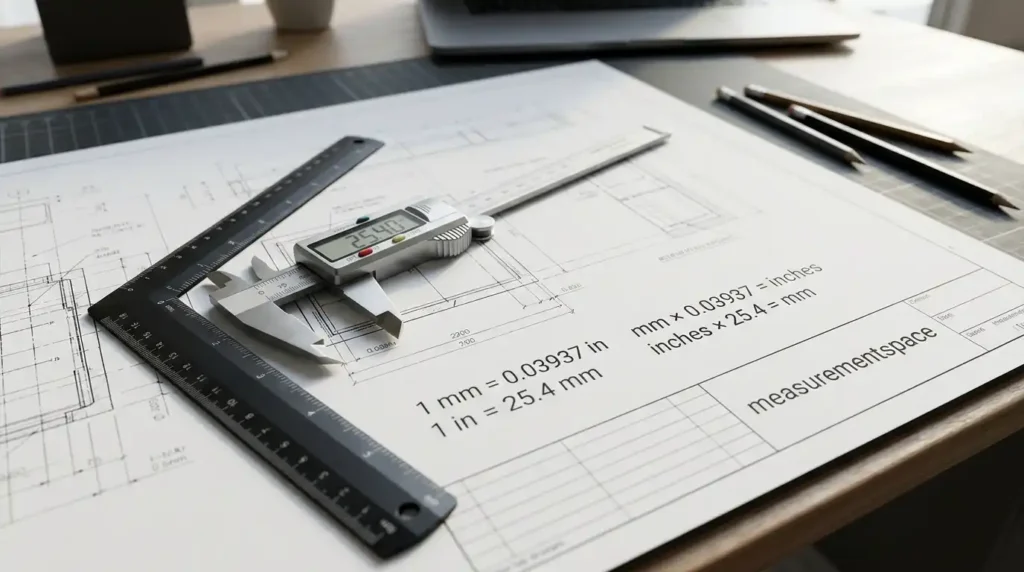
Converting millimeters to inches is easy when you know the correct number to use. One inch is equal to exactly 25.4 millimeters. This means you can change any measurement in millimeters to inches by dividing it by 25.4.
The Formula
Use this simple formula:
Inches = Millimeters ÷ 25.4
For 385 mm, the calculation is:
385 ÷ 25.4 = 15.1574803149 inches
The result is about 15.16 inches when rounded to two decimal places.
You do not need a special tool to do this calculation. You can use a basic calculator, a phone calculator, or a calculator on your computer.
Step-by-Step Calculation
Here is how to change 385 mm to inches in three easy steps.
Step 1: Write down the measurement.
Start with 385 millimeters.
Step 2: Divide by 25.4.
Take 385 and divide it by 25.4.
385 ÷ 25.4 = 15.1574803149
Step 3: Round the answer.
For most everyday uses, two numbers after the decimal point are enough.
15.1574803149 inches ≈ 15.16 inches
Therefore, 385 mm is about 15.16 inches.
Keep in mind that 15.16 inches is a rounded answer. The full result has more decimal places, so the rounded number is not the exact value.
385 mm in Inches and Feet
Sometimes, inches alone are not the easiest way to understand a length. You may want to know the same measurement in feet and inches.
There are 12 inches in 1 foot. Since 385 mm is about 15.16 inches, it is longer than 1 foot.
To find the remaining inches, subtract 12 from the full measurement.
15.1574803149 − 12 = 3.1574803149 inches
This gives the following result:
- Millimeters: 385 mm
- Inches: About 15.16 inches
- Feet and inches: About 1 foot 3.16 inches
- Centimeters: 38.5 cm
The feet-and-inches form is useful when you are measuring furniture, boards, room items, or other objects with a tape measure.
Remember that 1 foot 3.16 inches is a rounded measurement. If you need a very close fit for a project, use the level of detail required by your measuring tool.
Quick Millimeters to Inches Chart
The chart below shows measurements near 385 mm. It can help you compare sizes without doing the same calculation again and again.
| Millimeters (mm) | Inches (in) |
| 350 mm | 13.78 in |
| 360 mm | 14.17 in |
| 370 mm | 14.57 in |
| 380 mm | 14.96 in |
| 385 mm | 15.16 in |
| 390 mm | 15.35 in |
| 400 mm | 15.75 in |
| 410 mm | 16.14 in |
| 420 mm | 16.54 in |
| 430 mm | 16.93 in |
| 440 mm | 17.32 in |
Each result in the chart is rounded to two decimal places. The value in the 385 mm row is the main measurement for this guide.
How to Read the Chart
Find the millimeter value in the left column. Then look across the same row to see its size in inches.
For example, 380 mm is about 14.96 inches, while 400 mm is about 15.75 inches. A measurement of 385 mm falls between these two sizes and equals about 15.16 inches.
This chart is useful if you are working with metric measurements but your ruler or tape measure shows inches.
What Does 385 mm Look Like?
A length of 385 mm is about 38.5 centimeters or 15.16 inches. It is a little more than 15 inches long.
You can think of it as a length that is slightly longer than a standard 12-inch ruler. The extra length is about 3.16 inches.
This comparison can help you picture the size, but it should not replace a real measurement. Objects that look close in size can still have different lengths.
Comparing 385 mm With 12 Inches
A standard 12-inch ruler is equal to 304.8 mm. Since 385 mm is longer, you would need more than one ruler length to cover the full distance.
The difference is:
15.15748 inches − 12 inches = about 3.16 inches
So, 385 mm is about 3.16 inches longer than a 12-inch ruler.
Comparing 385 mm With 400 mm
A measurement of 400 mm equals about 15.75 inches. This is slightly longer than 385 mm.
The difference between the two measurements is 15 mm, which is about 0.59 inches.
This can help when comparing parts, boards, or other items that have measurements close to 385 mm.
Where Can You Use a Measurement of 385 mm?
A measurement of 385 mm can be useful in many everyday tasks. The exact use depends on the object you are measuring and the size needed for your work.
1. Furniture
When measuring furniture, you may need to change millimeters to inches to compare the size of a part with the space available in your room.
For example, if a furniture part is listed as 385 mm wide, you can think of it as about 15.16 inches wide. This makes it easier to compare the measurement with other items listed in inches.
Always check whether the number refers to the width, height, or depth. These measurements describe different sides of an item.
2. Home Projects
If you are working on a home project, you may need to measure wood, shelves, panels, or other parts. Some instructions use millimeters, while your measuring tape may show inches.
Knowing that 385 mm is about 15.16 inches helps you work between these two systems.
Before cutting or drilling, check the measurement carefully. A small mistake may cause a part to be too short or too long.
3. Tools and Parts
Some tools and machine parts use millimeters in their size details. If you need to compare these parts with a measurement in inches, this conversion can help.
For example, a part that measures 385 mm in length is about 15.16 inches long. This tells you its length, but it does not tell you whether the part will fit another item.
For a good fit, also check its width, height, shape, and any other size details that matter.
4. Online Shopping
Online shops may list item sizes in millimeters, centimeters, or inches. Changing the measurement to a unit you understand can make it easier to decide whether an item is the right size.
If a product is listed as 385 mm long, you can compare it with a space that is about 15.16 inches long.
Do not rely on the length alone if the item must fit inside a box, shelf, drawer, or other space. Check all the listed measurements before buying.
How to Convert Millimeters to Inches Without Making a Mistake
The main rule is simple: divide millimeters by 25.4. However, a few common mistakes can lead to the wrong answer.
Mistake 1: Dividing by 10
Some people divide 385 by 10 and get 38.5. That answer is correct in centimeters, not inches.
Here is the difference:
- 385 mm ÷ 10 = 38.5 cm
- 385 mm ÷ 25.4 ≈ 15.16 inches
Use 10 when changing millimeters to centimeters. Use 25.4 when changing millimeters to inches.
Mistake 2: Multiplying Instead of Dividing
To change millimeters to inches, divide by 25.4. Do not multiply by 25.4.
For example:
385 ÷ 25.4 ≈ 15.16 inches
If you multiply 385 by 25.4, you will get a much larger number that does not give the answer in inches.
Mistake 3: Rounding Too Early
It is better to keep the full calculator result until the end of the calculation. Then round the final answer to the number of decimal places you need.
For 385 mm, the calculator gives about 15.1574803149 inches. Rounding this to two decimal places gives 15.16 inches.
If you round too early, later calculations may become less accurate.
Mistake 4: Forgetting the Unit
Always write the unit beside the number. For example, 385 mm and 385 inches describe very different lengths.
Writing 15.16 inches makes it clear what the answer means. This is especially helpful when you are sharing measurements with someone else or following building instructions.

Millimeters, Centimeters, and Inches: What Is the Difference?
Millimeters, centimeters, and inches are all used to measure length. However, they belong to different measurement systems or use different-sized units.
A millimeter is a small metric unit. Ten millimeters make one centimeter, and 1,000 millimeters make one meter.
An inch is used in the inch-based measurement system. There are 12 inches in one foot.
Here are the main facts:
| Unit | Equal to |
| 1 centimeter | 10 millimeters |
| 1 inch | Exactly 25.4 millimeters |
| 1 inch | Exactly 2.54 centimeters |
| 1 foot | 12 inches |
| 1 meter | 1,000 millimeters |
For the measurement in this guide:
- 385 mm = 38.5 cm
- 385 mm ≈ 15.16 inches
- 385 mm ≈ 1 foot 3.16 inches
These values describe the same length in different units. Only the way the measurement is written changes.
Frequently Asked Questions
1. How many inches is 385 mm?
385 mm equals about 15.16 inches. To find the answer, divide 385 by 25.4. The result before rounding is about 15.15748 inches.
2. What is 385 mm in feet and inches?
385 mm equals about 1 foot 3.16 inches. First, change 385 mm to inches. Then take away 12 inches to find the remaining inches after one foot.
3. How many centimeters are in 385 mm?
385 mm equals 38.5 centimeters. Divide 385 by 10 to change millimeters to centimeters.
4. Is 385 mm longer than 15 inches?
Yes. Fifteen inches equals 381 mm. Since 385 mm is 4 mm longer, it is about 0.16 inches longer than 15 inches.
5. How do I calculate 385 mm to inches on a calculator?
Enter 385, press the divide button, and enter 25.4. The result is about 15.15748. Round it to two decimal places to get 15.16 inches.
6. Is 15.16 inches the exact answer for 385 mm?
No. It is the answer rounded to two decimal places. The unrounded result is approximately 15.1574803149 inches, while the conversion factor of 25.4 millimeters per inch is exact.
7. What is the difference between 385 mm and 400 mm?
The difference is 15 mm. In inches, 15 mm is about 0.59 inches, so 400 mm is about 0.59 inches longer than 385 mm.
8. Can I use 15.16 inches for cutting wood?
You can use 15.16 inches as a rounded conversion for general measuring. For cutting wood or making parts that must fit closely, follow the required measurement and use a suitable ruler or tape measure. The needed level of accuracy depends on the job.
Conclusion
385 mm to inches is a simple conversion once you know the correct formula. Divide 385 by 25.4 to get about 15.15748 inches, which rounds to 15.16 inches.
The same length is 38.5 centimeters or about 1 foot 3.16 inches. You can use these values to compare measurements, check product sizes, and work on home projects.
For other millimeter measurements, use the same rule: divide the number of millimeters by 25.4 to find the length in inches.

Chloe Harper writes clear, practical guides on measurements and unit conversions. She focuses on simple explanations and real-life examples so readers can get accurate answers quickly.